
NIPT Test in Nepal: Safer Maternal Screening

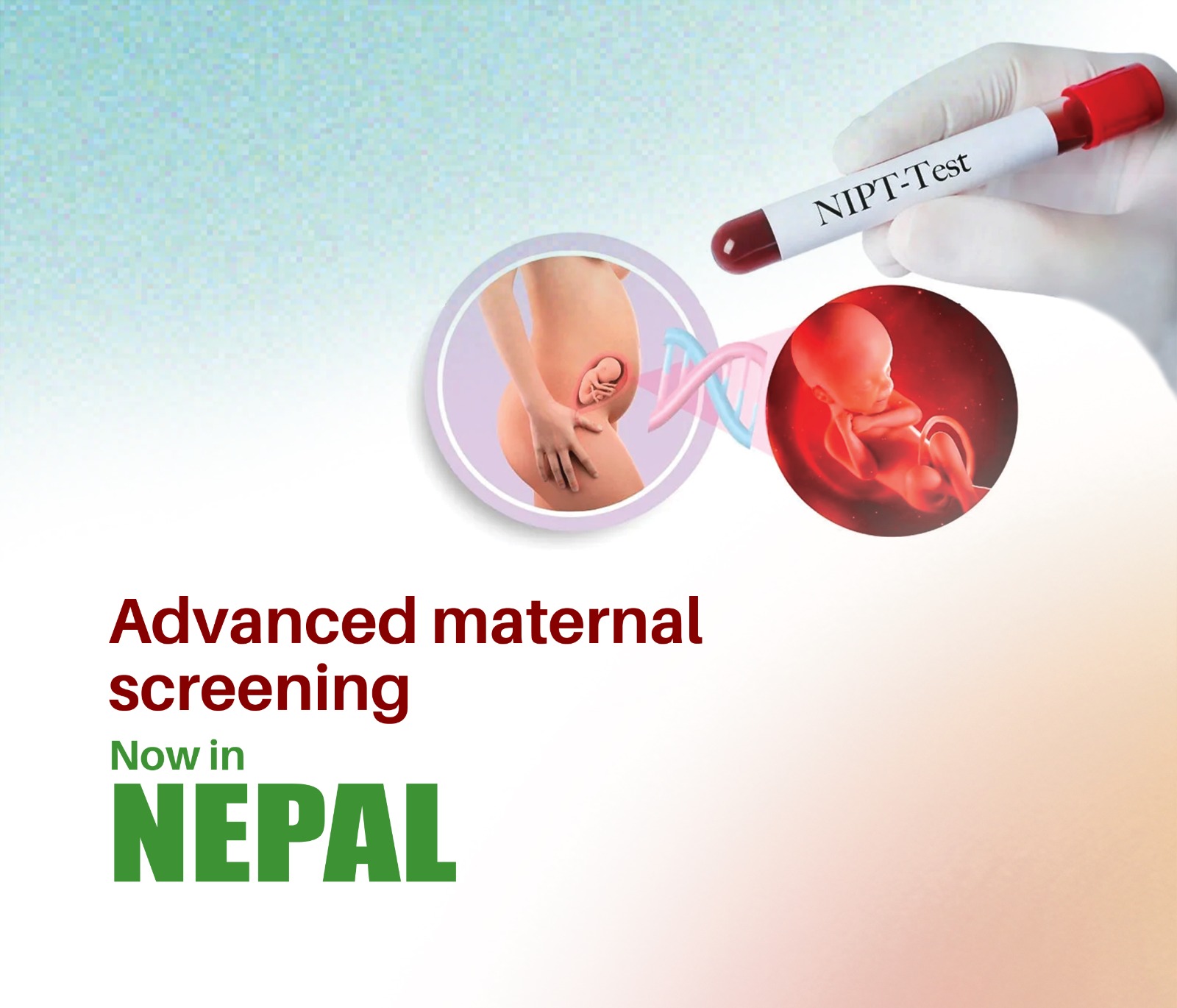
At some point during pregnancy, almost every expectant mother finds herself asking: “Is my baby developing normally?”
At National Path Lab, we believe this question deserves a clear, scientific, and reliable answer. Today, that answer is increasingly being provided through the NIPT test in Nepal, a major advancement in maternal screening.
What is the NIPT Test?
Non-Invasive Prenatal Testing (NIPT) is an advanced maternal screening test performed using a simple blood sample from the mother.
This test analyzes cell-free DNA (cfDNA) fragments present in the mother’s blood, which originate from the placenta and reflect the genetic makeup of the fetus.
Unlike diagnostic tests, NIPT does not provide a definitive diagnosis. Instead, it assesses the risk of specific chromosomal abnormalities in the fetus. If a high-risk result is detected, further diagnostic testing may be recommended.
Why NIPT Matters in Maternal Screening in Nepal
With advances in medical science, prenatal screening has become more refined and reliable. Among available options, NIPT stands out as a safe, simple, and highly accurate screening tool - performed without any risk to the mother or baby.
Early risk detection allows:
timely medical consultation
better preparation and decision-making
reduced anxiety if results are normal
When Should You Take the NIPT Test?
The NIPT test in Nepal can be performed after 10 weeks of pregnancy, when sufficient fetal DNA is present in the mother’s bloodstream.
In practice, testing is commonly done between 10.5 to 24 weeks of gestation.
Who Should Consider NIPT?
While NIPT is available to all pregnant women, it is particularly recommended in the following cases:
Maternal age 35 years or above
Family or previous history of chromosomal abnormalities
Recurrent pregnancy loss (miscarriages)
Abnormal findings in ultrasound (e.g., increased nuchal translucency or structural anomalies)
High-risk results from prior screening tests (Double Marker or Quadruple Test)
What Conditions Does NIPT Screen For?
NIPT primarily evaluates abnormalities in chromosome numbers, including:
Trisomy 21 (Down Syndrome)
This occurs when there is an extra copy of chromosome 21. It can affect the child’s intellectual development, physical features, and may be associated with certain health conditions.
Trisomy 18 (Edwards Syndrome)
This is a serious condition caused by an extra chromosome 18. Many affected pregnancies result in miscarriage, and infants born with this condition often have severe medical complications and limited survival.
Trisomy 13 (Patau Syndrome)
Caused by an extra chromosome 13, this condition leads to multiple severe developmental abnormalities, including issues in brain formation, heart defects, and facial differences. Survival beyond infancy is uncommon.
NIPT can also assess certain sex chromosome abnormalities, such as:
Turner Syndrome (45,X)
This condition affects females, where one of the X chromosomes is completely or partially missing. It may result in short stature, delayed puberty, and possible fertility challenges. Some individuals may also have heart, kidney, or thyroid-related conditions.Klinefelter Syndrome (47,XXY)
This condition affects males, where there is an extra X chromosome. It may lead to reduced facial and body hair, lower testosterone levels, fertility issues, and sometimes mild learning difficulties.
How Does the NIPT Test Work?
The process is straightforward:
Blood Collection
Around 10 ml of blood is drawn from the mother. This is simple and painless.
cfDNA Extraction
Plasma is separated, and cell-free DNA fragments are isolated.
Next-Generation Sequencing (NGS)
Advanced sequencing technology identifies DNA fragments and maps them to specific chromosomes.
Data Analysis
Software compares expected vs observed chromosomal proportions.
Reporting
Results are typically available within 7–12 days.
How Accurate is NIPT?
Among non-invasive maternal screening methods, NIPT is currently the most accurate.
Sensitivity for Down Syndrome: >99%
Specificity: ~99.9%
Compared to traditional screening methods like Double Marker and Quadruple Test (which have ~5% false positive rates), NIPT has a false positive rate of less than 0.1%.
Because of this, premier international health organizations such as ACOG and ISUOG recommend NIPT, especially for high-risk pregnancies.
What if the Result is High Risk?
A high-risk NIPT result is not a final diagnosis.
In such cases, confirmatory diagnostic testing - such as amniocentesis - may be recommended. This involves sampling amniotic fluid under ultrasound guidance.
While minimally invasive, this procedure carries a small risk and should always be discussed with a fetal medicine specialist.
NIPT Test Availability in Nepal
The availability of the NIPT test in Nepal has improved significantly in recent years.
At National Path Lab, Kathmandu, this advanced maternal screening test is now accessible within the country - reducing dependence on international laboratories and shortening turnaround times.
Previously, samples were sent abroad at a cost of NPR 40,000–50,000. Today, NIPT is available locally at approximately NPR 25,000, making it more accessible for families in Nepal.
A Smarter Approach to Maternal Screening in Nepal
NIPT represents a shift toward safer, more precise maternal screening in Nepal.
By identifying risks early, it allows families and clinicians to make informed decisions and approach pregnancy with greater clarity and confidence.
At National Path Lab, we are committed to bringing advanced diagnostic solutions closer to home - so that every pregnancy is supported with the best that modern science can offer.